
I studied at Udaya Public School. So, when I think about the school experience, I don't think about it only from the perspective of someone who now works in education. I also remember being a student here.
My school years were not always easy. I remember the pressure around academics, marks and expectations. Later, when I went to Kota to prepare for medical entrance examinations, that pressure took a different form.
There was a message I remember hearing repeatedly: if you could not clear NEET, you were a failure.
I don't think I was the only student who heard things like this. But as a young person preparing for an examination that was supposed to determine so much of my future, I became deeply afraid of that possibility. It felt as though one result could become a label, and that label could define me.
Looking back, I realise how little space there sometimes was to talk about what we were actually experiencing. We discussed preparation, marks, performance and results. But I wish there had been more conversations about the person going through all of it.
Because we were more than our marks. We still are.
That thought has stayed with me, particularly through my work at Udaya Public School.
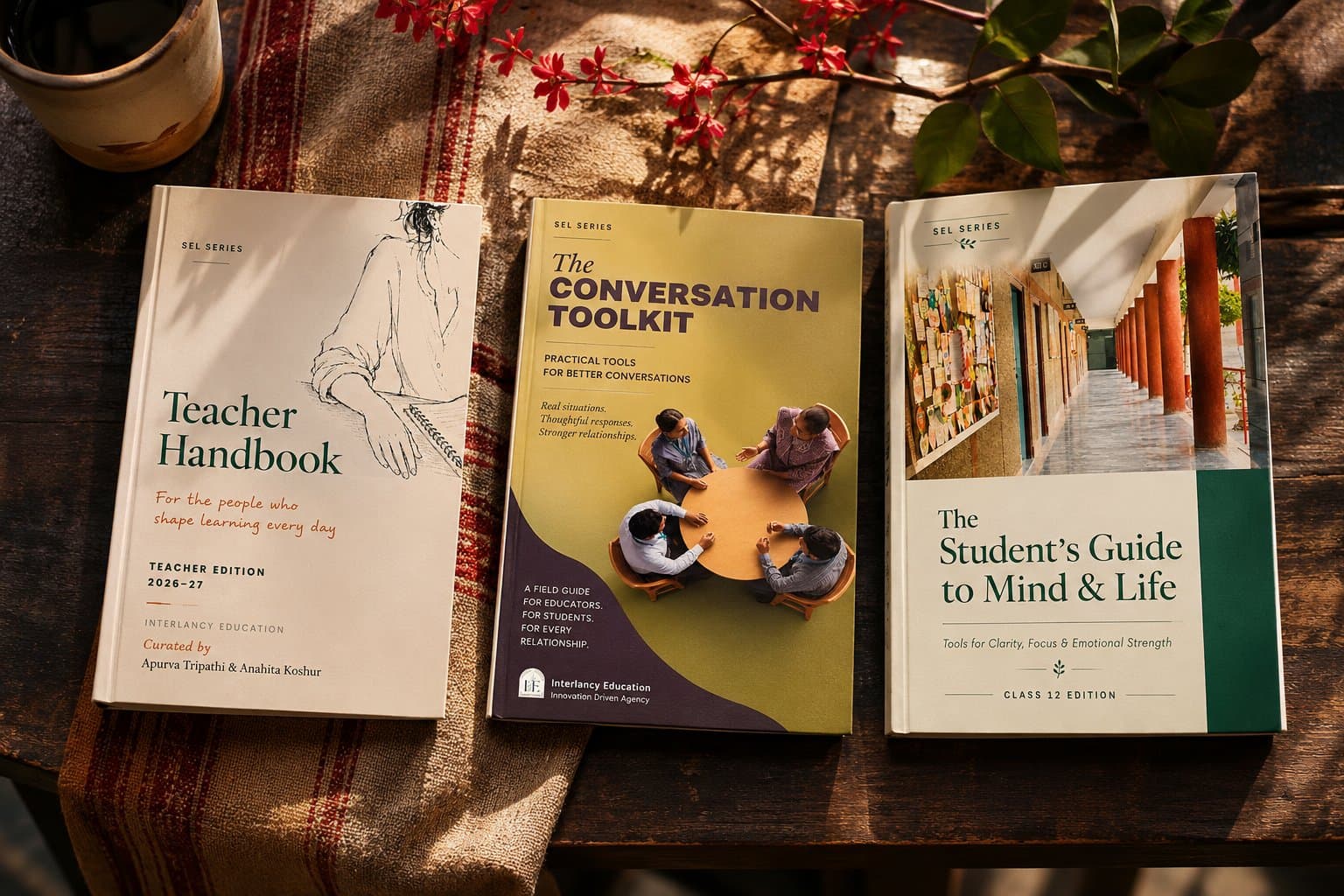
Over time, while working on our Social and Emotional Learning (SEL) initiatives, we began developing resources that could make these conversations a more regular part of school life. This led to three publications under our SEL Series: the Student Handbook, the Teacher Handbook and The Conversation Toolkit.
The Student Handbook: Beyond Academic Performance
The Student Handbook was developed for our Class XII students.
At this stage, students are preparing for examinations and making decisions about their futures. It is easy for conversations to become centred around academic performance. We wanted to make room for something else, too.
The handbook introduces students to self-awareness, emotional understanding, relationships, boundaries and ways of managing stress. It includes practical tools such as the RULER approach and breathing exercises.
The intention is simple: students should have opportunities to understand themselves, not just work towards their next examination.
The Teacher Handbook: The Person Behind the Profession
While thinking about students, we also needed to think about teachers.
Much of the conversation around teaching focuses on performance, classroom outcomes and responsibilities. These matter, but they are not the whole picture.
Teachers have their own experiences and pressures. They, too, need space to reflect on their well-being.
The Teacher Handbook addresses areas such as emotional regulation, burnout, professional boundaries, respectful communication, staffroom culture, safeguarding and inclusion. It is intended as a practical resource for educators, grounded in situations they encounter at work.
The Conversation Toolkit: Learning to Listen and Respond
The third publication, The Conversation Toolkit, came from another observation: the way we communicate can shape what happens next.
I have found conversations difficult myself at times. Knowing what I wanted to say and finding the words to say it were not always the same thing. Sometimes, I would leave a conversation thinking about what I could have expressed differently.
Working on this toolkit made me examine that more closely.
It brings together everyday situations involving students, parents, colleagues, school leadership and ourselves. It offers suggestions on how to respond, what to avoid and questions to reflect on.
We did not want to create scripts for people to memorise. We wanted to offer a starting point, because every conversation is different. Sometimes the most useful thing we can do is pause and try to understand before responding.
What Connects These Three Publications?
The three books have different audiences, but they share one intention.
The Student Handbook makes space for the student's experience. The Teacher Handbook recognises the person behind the profession. The Conversation Toolkit helps us think about how we listen, communicate and relate to one another.
We hope these resources become part of everyday school life, through student well-being periods, teacher discussions, counselling, parent interactions, home visits and other school conversations.
They will also continue to take shape through the feedback and experiences of the people who use them.
I sometimes think about what I would have valued as a student. Perhaps not another lecture about working harder, but a conversation that helped me understand why I was struggling. Someone reminding me that one examination, one result or one difficult phase did not define me.
I cannot change what that experience was like for me. But I can contribute to creating resources that make room for some of the conversations I wish we had more often.
For me, that is what this work is about.
A student is more than a result. A teacher is more than their performance. And a school is more than what happens in its academics or beyond-academics classrooms — it is a place shaped by the people within it, and the conversations they are willing to have.