
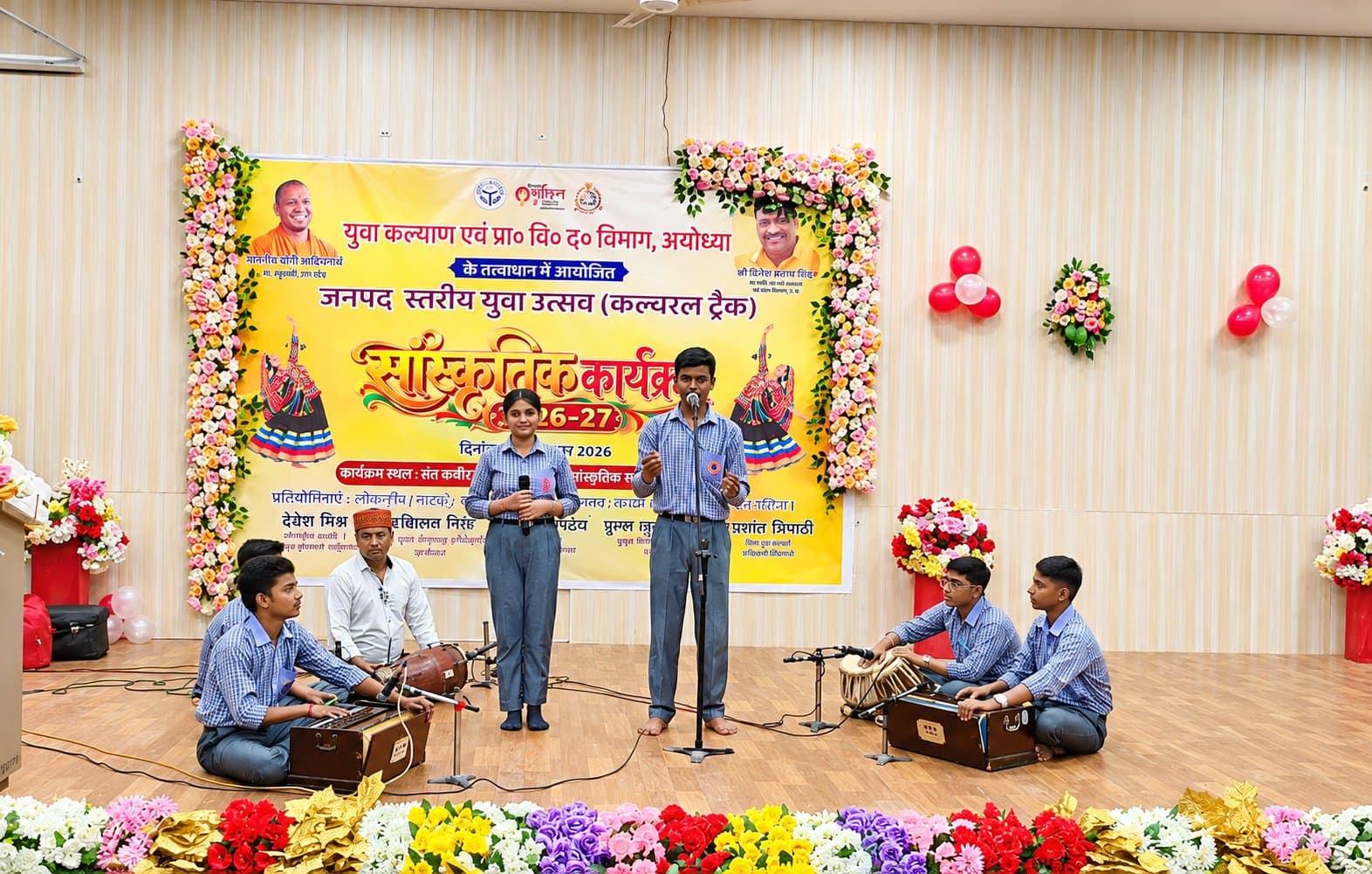
The Blossoming of Childhood Through the Manure of Musical Instruments
I started teaching my daughter how to play the Veena when she was hardly three years old. Seeing her struggle with the large veena, my teacher was kind enough to gift me a 100-year-old veena that was specifically made for children. This article stems from my personal experience of seeing her blossom through music and the grasp of mathematics and science she received innately through her early music education.
Veena Sapta Vyahriti Soochini — the Veena can demonstrate to one all the seven worlds. I remember a time in my childhood where every child in my locality in Trivandrum would be learning at least one musical instrument. Veena, violin, mridangam, ganjira, harmonium, tabla, flute — the list is long of what India has to offer. This culture of early music education has been lost in our flood of urbanisation.
Why Musical Instruments Belong in Schools
So why is learning to play a musical instrument so important for children, and why should it be taught in schools? We often read about Attention Deficit Disorder in children and ignore it as a phenomenon with no cure. Teachers lament that they are unable to get children to focus in class. Every child has an innate talent for music — give any child a musical instrument and see how they experiment with it without any guidance. Music is easily accessible to everyone — it just has to be made available in a form and manner that is easy. Musical instruments can play the role of the bridge that makes music easy and accessible to children.
Listening Deeply: The Physics Hidden in Sound
Musical instruments require deep neuro-muscular coordination. Playing any musical instrument deepens the ability to listen. Indian music has substantial nuances to it — tones and semi-tones which are called Shrutis — the word Shruthi itself means "that which is heard". Listening to Shrutis over time with attention and learning to tune a string lays the foundation for advanced physics later on. One can easily grasp fundamentals of harmonics without much struggle given the hands-on experience with tuning musical instruments as a child. This is precisely the kind of embodied learning that our academics programme at Udaya seeks to deepen.
Rhythm as Mathematics
In addition, playing to a beat deepens one's awareness of rhythm and lays a deep foundation for understanding mathematics. Indian music is replete with complex rhythmic patterns that go in steps of 3, 4, 5, 7 and 9 — respectively called Tisram, Chathurasram, Khandam, Misram and Sankeernam. These patterns help introduce mathematics in a very gentle and practical manner to children. So much before they learn mathematical progressions they would know from their first-hand experience the patterns inherent in nature through music.
Learning Together: Humility and Interpersonal Skills
Consistently practising music individually and in a group helps improve both one's own neuro-muscular coordination and helps naturally develop skills needed to work in a group. Inter-personal relationships blossom through the medium of music. Learning to accompany a vocalist with a musical instrument brings both deep awareness of another person's expressions and imbibes humility in children. This resonates with the spirit of beyond-academics life at school — where growth happens in the spaces between lessons.
Two Minutes That Change Everything
Even two minutes of playing a musical instrument can relax the mind and over time substantially improve a person's ability to focus on complex tasks. Numerous studies exist to show the deep connection between a person's breathing and emotional states based on music. Given the evidence available and the standout benefits of instrumental music, introducing even one hour of instrumental music training in schools may have far-reaching effects in helping children focus better and understanding complex subjects in mathematics and science without much struggle.
The question is not whether music belongs in a school — the question is how soon we bring it back.