By Yugank Saini
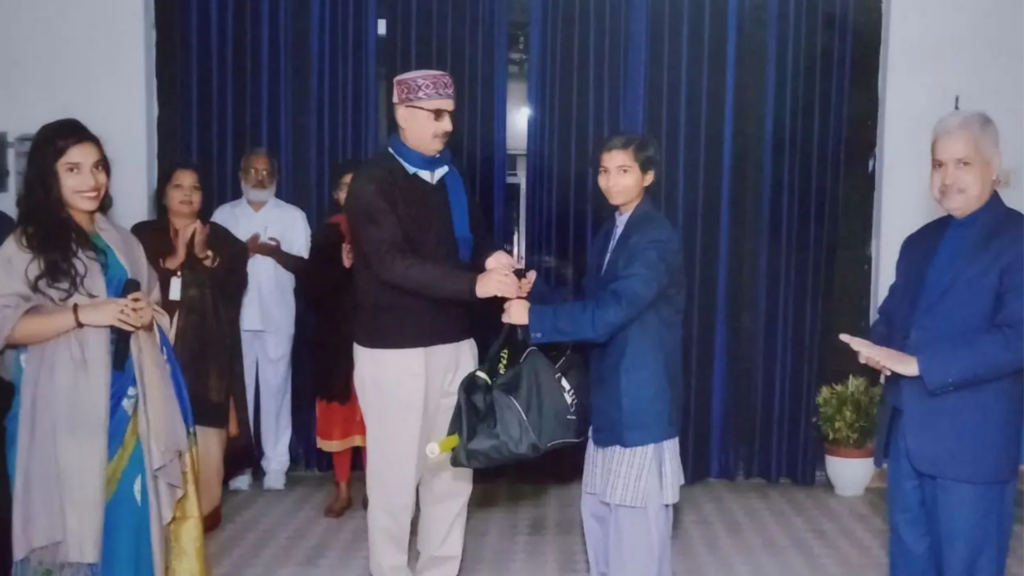
Every Saturday, the council members of Class 11 from Udaya Public School visit their adopted primary school, Kishundaspur, with a simple yet meaningful purpose. They engage children in English speaking activities, cultural expressions, and fun-based learning experiences. What began as an outreach initiative slowly turned into a deeply enriching journey for everyone involved.
As an observer, I had the opportunity to closely watch these interactions. What stood out was not a comparison between private and government school students, but a deeper understanding of how environment, exposure, emotions, and belief systems shape a child’s mindset.
The Silent Difference: Belief and Potential
One of the most powerful observations was the belief system of the primary school children. Many of them felt that ability comes from having facilities and resources. Because they lack access to modern tools, technology, and exposure, they often underestimate their own potential.
This belief is not their fault. It is shaped by surroundings, repeated experiences, and social narratives. In contrast, private school students often grow up assuming opportunity as a natural part of life, which gradually builds confidence and self-expression.
Yet, when these two groups of children came together, something truly beautiful happened.
When Children Interact, Learning Flows Both Ways
The interaction between the students of Udaya Public School and the children of the primary school revealed meaningful insights:
- Confidence grows through encouragement and exposure, not intelligence alone.
- Leadership develops when students learn to guide, support, and inspire rather than dominate.
- Joy, curiosity, and imagination exist equally everywhere; resources only shape how they are expressed.
- Creativity emerges even in limited environments when children feel safe to express themselves.
The council members did not just teach. They listened, adapted, and learned empathy. And the younger children did not just participate. They began to believe that their voices mattered.
Resources Do Not Define Capability, Thinking Does
From my own life experience, one truth stands strong. Having resources matters far less than knowing how to use or create them.
True capability begins with a thought, an idea, or a question in the mind. Every innovation, every achievement, and every meaningful change starts there. Our effort is not to make children compare themselves with others. It is to help them realize that:
- They can find resources within their surroundings.
- They can create opportunities through ideas and collaboration.
- They are capable of shaping their own direction, step by step.
We are striving to encourage these children to think freely, dream confidently, and choose their own path. Because when thinking changes, everything else begins to change too.
Gratitude to the Udaya Family
This initiative truly reflects the values that Udaya Public School stands for: empathy, responsibility, leadership, and inclusive growth. By allowing students to step beyond classrooms and connect with real lives, the school is nurturing not just achievers, but thoughtful and compassionate human beings.
I extend my heartfelt gratitude to the entire Udaya family for creating a platform where learning goes beyond boundaries, where minds meet not through resources, but through ideas. Because in the end, education is not about what we have. It is about how we think, how we feel, and how we uplift others.